Stuck on You: The Lovebug “Invasion” Taking Over Houston
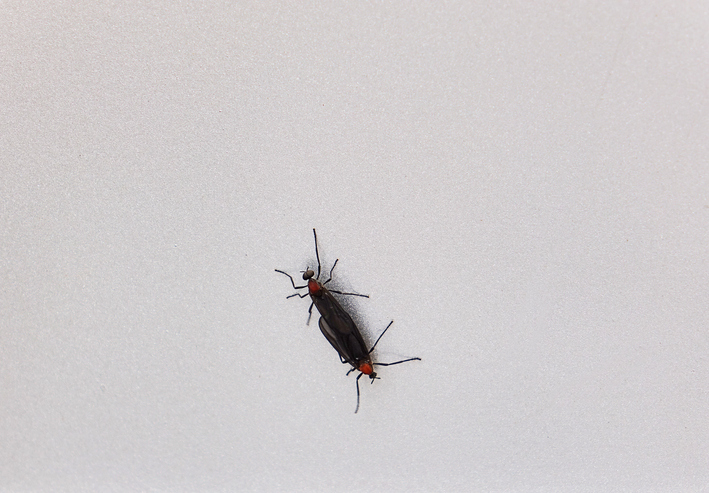
If you’ve stepped outside in Houston lately, you’ve likely noticed a certain uninvited duo crashing every outdoor party, rolling up inside your house unexpectedly, and no, it’s not your cousin and her new “situationship”—it’s the Lovebug. Scientifically known as Plecia nearctica, these tiny black-and-red flies are swarming the Bayou City in a display of PDA that would make even the boldest romantic blush.
The Science of the Squeeze
Though we call them “bugs,” they are actually members of the March fly family. Their claim to fame? They spend nearly their entire adult lives—roughly 3 to 5 days—locked in a mating embrace. While a single female can lay up to 350 eggs in decaying grass, the real “invasion” we see on our windshields is a twice-yearly event. In Houston, these peaks typically hit in May and September, though a warm Texas April often triggers an early debut. The silver lining? Each swarm usually tapers off after about four weeks. I know…four weeks of this.
Protect Your Glow (And Your Paint)
While they don’t bite or sting, lovebugs have a truly toxic trait: their bodies are highly acidic. When they meet your car at 65 mph, those remains can eat through your clear coat in just 24 hours if left to bake in the H-Town sun.
To keep your car and home fly-free:
- Wax On: A fresh coat of wax creates a barrier that makes cleaning splatters much easier.
- Time Your Commute: Lovebugs are most active between 10:00 AM and 6:00 PM. If you can, travel in the early morning or evening.
- Go Dark: They are attracted to light-colored surfaces and heat. If you’re painting your porch or picking an outdoor outfit, opt for darker hues to stay off their radar.
They may be a nuisance, but they’re just looking for love. Keep your car washed and your patience high—this season of “long-distance” romance will be over before you know it.